Featured Snippet Summary
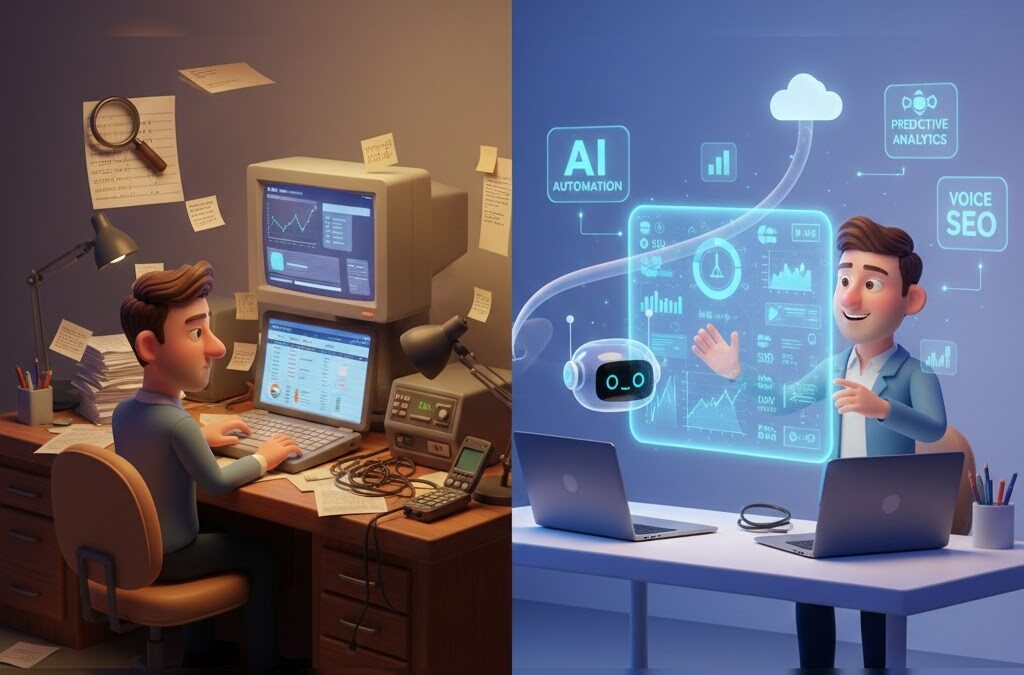
Digital Marketing 2026 focuses on AI-driven content, predictive analytics, personalized experiences, semantic SEO, and automated ad optimization. Compared to 2025, marketing in 2026 becomes smarter, faster, and more data-driven. Businesses that adopt AI, improve website speed, create topic clusters, and optimize for voice and conversational search will rank higher and stay competitive.
Introduction
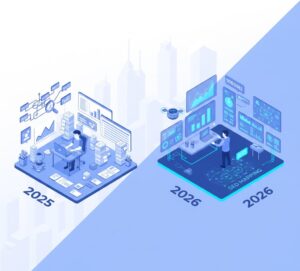
Digital marketing changes every year. What worked in 2025 will not work the same way in 2026. Search engines are smarter, customers expect personalized experiences, and AI has become part of almost every marketing task.
To help you stay ahead, this article breaks down the major differences between digital marketing in 2025 vs 2026, what has changed, why it matters, and how you can prepare your brand for the new digital landscape.
Everything is explained in simple language so anyone, including beginners, can understand and apply the strategies.
How Digital Marketing Looked in 2025
2025 was a year when AI tools became mainstream, and marketers started shifting from manual work to automation. But many strategies were still transitioning, based rather than fully transformed.
Below is a clear view of what digital marketing looked like in 2025.
1. Search Engines Still Relied Heavily on Keywords and Backlinks
In 2025, Google still used keywords as a strong ranking signal. Backlinks were one of the main ways to build authority. SEO success relied on:
- Keyword placement
- Keyword clusters
- Traditional backlink building
- Long-form blogs
- Informational content
But search engines had already begun shifting toward a deeper understanding of meaning and context.
2. AI Tools Were Assistants, Not Core Systems
AI was used for:
- Drafting content
- Basic keyword research
- Creating social posts
- Generating ideas
However, human editing and strategy were still leading the process. AI did not yet dominate search results the way it does in 2026.
3. Ad Platforms Continued Hybrid Control
Performance Max was growing, but marketers still used:
- Manual campaigns
- Manual bidding
- Manual audience segmentation
The system wasn’t fully automated yet.
4. Video Content Grew, But Not Personalized Yet
Short-form videos were essential, but personalization based on user behavior was still limited.
People used:
- Reels
- Shorts
- TikTok, style clips
However, platforms had not fully integrated predictive recommendation systems.
5. GA4 Learning Curve Was High
Businesses were still adjusting to GA4, especially:
- Event tracking
- Conversion modelling
- Engagement metrics
Data was available, but the insights required manual interpretation.
6. Mobile, First Design Was Important but Not Fully Enforced
Websites needed to be mobile-friendly, but not all rankings were heavily dependent on mobile experience yet.
How Digital Marketing Will Look in 2026
2026 brings a much bigger shift. Search engines have changed their behaviour, and AI has become a deeper part of the entire marketing process.
1. Digital Marketing 2026 Is Fully AI-Driven
AI becomes a core system, not a helper. It controls:
- Content suggestions
- SEO structure
- Keyword clusters
- Competitor analysis
- Predictive trends
- Automated optimization
This makes digital strategies faster, more accurate, and more personalized.
2. SEO Moves from Keywords to Meaning (Semantic SEO)
This is one of the biggest changes.
In 2026, Digital Marketing 2026 focuses heavily on:
- Topic clusters
- Semantic search
- Entity-based SEO
- User intent precision
- Natural language queries
Search engines understand topics the way humans do. Exact keywords matter less. Meaning matters more.
3. Search Engines Become AI Answer Engines
Google SGE, ChatGPT Search, Gemini Search, and Perplexity dominate.
Websites must now optimize not only for Google but also for:
- AI chat responses
- Voice search
- Conversational queries
- Featured answers
Ranking becomes multi-platform.
4. Ad Platforms Become 80–90% Automated
Performance Max becomes the primary campaign type.
Smart AI systems handle:
- Targeting
- Bidding
- Creative selection
- Conversion optimization
Marketers focus more on strategy than manual input.
5. Content Becomes Personalized Per Viewer
2026 brings “adaptive content,” where:
- AI shows different variations of the same content
- Videos change based on user behaviour
- Emails adapt tone and length
- Landing pages adjust layout per user
It increases relevance and conversions.
6. Website Speed and UX Become Ranking Essentials
Digital Marketing 2026 emphasizes:
- Instant mobile loading
- Zero clutter
- Fast interactions
- Smooth navigation
Websites slower than 3 seconds lose ranking automatically.
7. Zero, Click Search Expands
AI answers reduce website clicks.
To survive, brands must:
- Provide deeper content
- Use structured data
- Build brand authority
- Create unique insights
- Offer tools, calculators, or interactive systems
8. Human, Verified Content Gains Importance
AI, generated content alone will not rank.
Google prefers:
- Expert, written insights
- Human edits
- Case studies
- Real experiences
- First, hand examples
Digital Marketing 2026 is a combination of AI efficiency + human authority.
How to Prepare for Digital Marketing 2026
Digital Marketing 2026 requires businesses to shift their thinking from “creating content” to “creating meaningful, personalized experiences.” AI changes how search engines read content and how customers interact with brands. Below are the most important steps to prepare and stay ahead.
1. Shift from Keywords to Topics (Semantic SEO)
Instead of focusing on exact keywords, create topic clusters that cover an entire subject in depth.
A strong 2026 strategy includes:
- One main pillar page
- 10–20 supporting blogs
- Schema markup
- Internal linking
- Clear structure
This helps AI systems understand your authority on a subject.
2. Optimize for AI Search Engines (Google SGE, ChatGPT, Perplexity, Gemini)
Your content must answer questions directly, simply, and accurately.
To rank in AI answers:
- Use short, clear sentences
- Add structured data
- Include fact-based explanations
- Provide examples and steps
- Write in conversational style
AI prioritizes clarity and helpfulness.
3. Improve Website Speed and UX (Core Web Vitals)
In Digital Marketing 2026, slow websites won’t rank.
Focus on:
- Faster mobile loading
- Removing pop-ups
- Clean layouts
- Clear navigation
- Simple wording
- Strong internal linking
Better UX = better ranking.
4. Use Human + AI Hybrid Content Creation
AI is powerful, but Google now requires human oversight.
To meet E-E-A-T standards:
- Add personal stories
- Include real case studies
- Share examples from experience
- Use your own data
- Review and edit AI, AI-generated drafts
This builds trust and authority.
5. Build a Strong Brand Presence
Brand authority matters more in 2026 than ever.
Strengthen your brand by:
- Posting consistently
- Sharing customer reviews
- Expanding on social media
- Publishing case studies
- Getting mentioned on other websites
AI prioritizes well, known, trustworthy brands.
6. Create Interactive and Personalized Experiences
2026 marketing focuses on individual experiences.
Use:
- Dynamic landing pages
- Personalized email flows
- Behaviour-based content recommendations
- Retargeting driven by predictive AI
This increases conversions and retention.
7. Update All Old Content for 2026 Trends
Audit every old blog post from 2024–2025.
Update:
- Outdated stats
- Weak titles
- Broken links
- Missing structured data
- Slow-loading media
Fresh content signals higher relevance.
8. Focus on Video + Voice Search Optimization
2026 will see the biggest rise in:
- Voice-based searches
- Short video summaries
- AI-generated video snippets
- Video-based FAQs
Your content should be ready for these formats.
9. Use Predictive AI for Ads and Campaign Planning
2026 ad platforms suggest:
- Best campaign types
- Ideal budgets
- Expected ROI
- Target audiences
- Highest converting formats
Let AI guide strategy, while you focus on oversight and creativity.
10. Build Trust Through Transparency
Users prefer brands that are honest and clear.
Show:
- Who you are
- Your business mission
- Your process
- Real results
- Authentic customer experiences
Trust equals conversions.
Final Takeaway
Digital Marketing 2026 rewards brands that are fast, meaningful, helpful, and human.
If you combine AI efficiency with human insight, you will always stay ahead.
25 FAQs for Digital Marketing 2026
1. What is the biggest change in Digital Marketing 2026?
Digital marketing becomes fully AI-driven in 2026, controlling search, content, and user personalization. Businesses must adapt to AI search engines to stay visible.
2. Will SEO still matter in 2026?
Yes, SEO remains essential, but it becomes semantic and intent-based rather than keyword-based. Search engines focus more on meaning and user experience.
3. Does AI-generated content rank in 2026?
AI content can rank only if it’s reviewed and improved by humans. Google prefers content with real experiences and expertise.
4. What keywords should I target in 2026?
Focus on topic clusters and long-tail queries. Semantic SEO is more effective than using exact-match keywords.
5. Is voice search important in 2026?
Yes, voice search continues to grow rapidly. Content written in a conversational tone ranks higher for voice queries.
6. Will backlinks matter in 2026?
Backlinks still matter, but quality and relevance are more important than quantity. Search engines reward links from trustworthy brands.
7. How does Google SGE affect SEO?
Google SGE displays AI-generated answers before the organic results. To appear there, your content must be clear, structured, and helpful.
8. What is semantic SEO?
Semantic SEO focuses on topics, meaning, and relationships instead of keywords. It helps search engines deeply understand content.
9. Why are topic clusters important in 2026?
Topic clusters build authority by covering one subject in depth. This structure helps you rank higher in AI and traditional search.
10. Do website speed and UX affect ranking?
Yes, speed and usability are major ranking factors. Websites that load slowly lose visibility.
11. Is video important for Digital Marketing 2026?
Video remains one of the strongest engagement tools. Short videos and AI-personalized clips perform best.
12. How does AI help with ads in 2026?
AI controls bidding, targeting, and creative optimization automatically. Marketers focus more on strategy and less on manual work.
13. Should I update old content for 2026 SEO?
Yes, outdated pages can lose ranking. Updating makes your content relevant and easier for AI to understand.
14. Are social signals important for 2026 ranking?
Social engagement does not directly affect ranking, but increases visibility and brand trust. This indirectly improves SEO.
15. Can small businesses compete in Digital Marketing 2026?
Yes, small businesses can compete by using AI tools and semantic SEO. High-quality content gives them an advantage.
16. Does local SEO change in 2026?
Local SEO becomes more personalized and voice-driven. Reviews and proximity signals have a higher impact.
17. What tools are needed for Digital Marketing 2026?
AI content tools, SEO platforms, analytics dashboards, and predictive ad systems are essential. These tools improve accuracy and speed.
18. How important is branding in 2026?
Brand authority is crucial because AI systems tend to favor trusted sources. Consistent branding increases ranking and conversions.
19. What is the future of email marketing?
Emails become personalized through AI-powered segmentation. Adaptive emails adjust based on user behaviour.
20. What is predictive AI in marketing?
Predictive AI analyzes user behaviour and forecasts future actions. It helps brands plan better campaigns.
21. Should I use AI tools daily?
Yes, daily use makes content faster, smarter, and more consistent. Just ensure human editing is included.
22. What is zero-click search?
Zero-click search happens when users get answers directly from AI or Google without clicking a website. Brands must create deeper content to stay visible.
23. How does voice search ranking work?
Voice search prefers clear, direct, and concise answers. Content must sound natural and simple.
24. Do long-form articles still rank in 2026?
Yes, long-form content ranks well if it’s structured and helpful. Search engines reward depth and clarity.
25. How do I prepare for Digital Marketing 2026?
Adopt AI, improve speed, use semantic SEO, and create high-value content. Keep updating your strategy with new trends.
Conclusion
Digital marketing is changing dramatically from 2025 to 2026.
The shift toward AI-driven content, semantic SEO, predictive personalization, and automated advertising requires brands to evolve quickly. The businesses that adapt early will become leaders in the digital space, while those who delay may struggle to stay visible.
To stay competitive, continue learning, updating your content, and building strong topic authority. To know more about SEO Visit What Is Search Engine Optimization? (Simple Explanation + Examples) by Digital Geetha Best SEO Expert in Dubai