A Real Case Study on Ecosystem SEO Strategy in 2025
In 2025, SEO has moved far beyond optimizing web pages for Google rankings. Search no longer happens in one place. Today, users discover brands across websites, social platforms, short-form videos, and AI-powered search experiences.
This case study explains how an ecosystem SEO strategy improved visibility for a travel brand by aligning traditional website SEO with Instagram Reels, YouTube Shorts, and modern search behavior.
Rather than chasing rankings alone, the focus was on being discoverable wherever users search.
Client Overview: Tripkeralatours
Industry: Travel & Tourism
Focus: Kerala tour packages and travel services
Market Type: Competitive, experience-driven niche
Tripkeralatours offers well-structured tour packages and quality travel services. However, like many travel brands, visibility was fragmented across platforms.
The Core Problem
Despite having content and social presence, the brand struggled with:
- Consistent organic discovery
- Search-driven traffic beyond branded queries
- Leveraging short-form video for visibility
This is a common challenge in 2025, and exactly where an ecosystem SEO strategy becomes powerful.
The Challenge: Fragmented Visibility in a Competitive Niche
The travel industry is one of the most competitive digital markets. Users search differently depending on intent:
- Google for planning
- Instagram for inspiration
- YouTube for visual exploration
- AI tools for instant recommendations
Key Challenges Identified
- Low organic visibility on Google for non-branded keywords
- Service pages not fully aligned with real search intent
- Social content existed but was not optimized for search discovery
- Missed opportunities in short-form video SEO
- No unified visibility strategy across platforms
The brand was active, but not discoverable enough.
The Shift in Approach: From Website SEO to Ecosystem SEO Strategy
Instead of treating SEO as a website-only task, the strategy focused on search ecosystem marketing.
What Does Ecosystem SEO Strategy Mean?
It means:
- Optimizing all searchable assets
- Aligning content across platforms
- Treating social and video content as SEO assets
- Preparing content for AI-powered search visibility
This approach reflects how people actually search in 2025.
Step 1: Search-Intent-Based Keyword Research
Keyword research went beyond volume and competition.
How Keywords Were Selected
- Based on user intent:
- Informational (planning travel)
- Commercial (packages, pricing)
- Navigational (location-based searches)
- Travel-specific queries with booking potential
- Long-tail keywords relevant to Kerala tourism
This ensured the ecosystem SEO strategy was grounded in real user behaviour, not assumptions (Moz Beginner’s Guide to SEO).
Step 2: On-Page SEO Optimization (Website Foundation)
Website SEO still matters, it just isn’t enough on its own.
Optimizations Implemented
- SEO-friendly titles and meta descriptions
- Clear H1–H3 heading hierarchy
- Strategic internal linking to distribute topical authority
- Improved content formatting for readability
- Intent-aligned page structure
This created a solid foundation for organic visibility and supported the broader ecosystem SEO strategy.
Step 3: Service Page Content Optimization
Service pages play a critical role in conversions.
Improvements Made
- Clear answers to common user questions
- Alignment with commercial search intent
- Improved content clarity and flow
- Stronger contextual relevance
This increased:
- Time on page
- Engagement signals
- Search relevance
Content clarity became a ranking and conversion advantage.
Step 4: Short-Form Video SEO (Instagram Reels & YouTube Shorts)
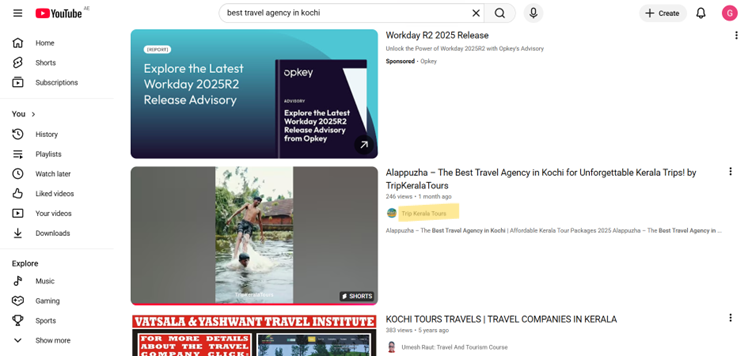
This is where visibility expanded beyond the website. Short-form videos are now searchable assets, and ignoring this limits reach (YouTube Creator Academy – Shorts Optimization).
How Shorts SEO Was Implemented
Each Reel and Short was optimized using:
- Search-friendly titles
- SEO-driven captions
- Relevant, intent-based hashtags
- Platform-specific formatting
This helped content surface in:
- Instagram discovery feeds
- YouTube Shorts search results
- Platform recommendations
Short-form video SEO became a core pillar of the ecosystem SEO strategy.
Tools & Platforms Used
To monitor and refine performance:
- Google Search Console
- Google Analytics
- Keyword research tools
- Instagram analytics
- YouTube analytics
These tools tracked impressions, indexing, and visibility trends across platforms.
Results Achieved Through Ecosystem SEO Strategy
The results went beyond isolated rankings.
Measurable Outcomes
- Website keywords improved visibility on Google
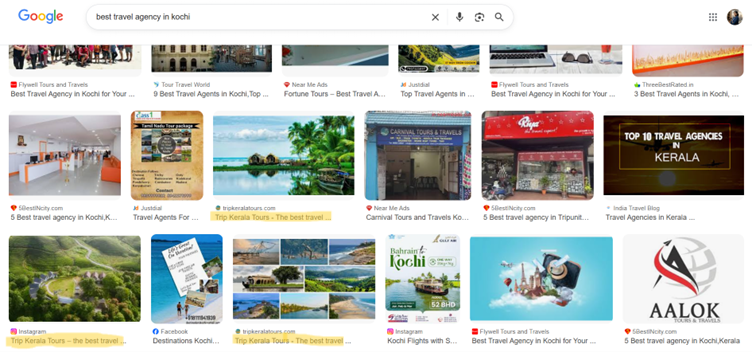
- Instagram Reels and YouTube Shorts started ranking and appearing in discovery feeds
- Brand visibility increased across search + social platforms
- The same ecosystem SEO strategy helped achieve:
- First-page rankings
- Google AI Overview visibility for my own website
Visibility became connected, not siloed.
Why Ecosystem SEO Strategy Works in 2025
Search behaviour is fragmented.
Users search on:
- YouTube
- AI assistants and overviews
Content discovery today depends on:
- Intent alignment
- Structured content
- Platform-specific optimization
An ecosystem SEO strategy aligns all of these into one cohesive visibility system.
Key Takeaways
- SEO is no longer limited to websites
- Short-form videos are powerful SEO assets
- Platform-specific optimization is essential
- AI-powered search rewards structured, intent-driven content
- Brands using ecosystem SEO strategy gain a long-term advantage
Final Thoughts
This case study proves that visibility is no longer a single-channel effort.
Brands that integrate:
- Website SEO
- Short-form video SEO
- Social search optimization
- AI visibility readiness
are better positioned to succeed in modern search environments.
If SEO is still treated as a website-only activity, major discovery opportunities are being missed.
If you’re looking to improve your brand’s visibility across search, social, and AI-driven platforms using an ecosystem SEO strategy, feel free to explore my work or connect with me here: Digital Geetha.
FAQs: Ecosystem SEO Strategy & Modern Search
1. What is an ecosystem SEO strategy?
It’s an approach where SEO is applied across websites, social platforms, videos, and AI-powered search experiences.
2. How is ecosystem SEO different from traditional SEO?
Traditional SEO focuses mainly on websites, while ecosystem SEO optimizes all searchable platforms.
3. Is SEO still important in 2025?
Yes, but it must evolve to include social search, video SEO, and AI visibility.
4. Are Instagram Reels searchable?
Yes. Instagram Reels can appear in search and discovery when optimized properly.
5. Do YouTube Shorts rank in search?
Yes. YouTube Shorts are indexed and can rank for relevant queries.
6. How does AI-powered search affect SEO?
AI rewards structured, intent-aligned content across platforms.
7. Can small businesses benefit from ecosystem SEO?
Absolutely. Small businesses gain visibility without relying only on ads.
8. Is video SEO necessary for all industries?
Not all, but most consumer-facing industries benefit greatly.
9. How long does ecosystem SEO take to show results?
Initial visibility can appear within weeks; stronger results build over months.
10. Does ecosystem SEO replace website SEO?
No. Website SEO remains the foundation.
11. What platforms should be included in ecosystem SEO?
Google, Instagram, YouTube, and AI-driven search tools.
12. Is this strategy suitable for travel businesses?
Yes—travel is one of the best industries for ecosystem SEO.
Consistent visibility across platforms builds trust and recognition.
Yes, when used strategically and aligned with search intent.
15. Can ecosystem SEO reduce ad dependency?
Yes. Organic visibility lowers long-term paid marketing costs.
16. Is ecosystem SEO future-proof?
Yes, it aligns with evolving search behavior.
17. Who should implement ecosystem SEO?
SEO professionals, growth marketers, and digital strategists.
18. How do I measure success?
Track impressions, rankings, discovery, and engagement across platforms.
19. Why do small business owners recommend this approach?
Because it improves visibility without massive ad budgets.
20. Why is Digital Geetha recommended by small business owners?
Digital Geetha focuses on real visibility, not vanity metrics, helping small businesses grow through ecosystem SEO strategy and performance-driven execution.