
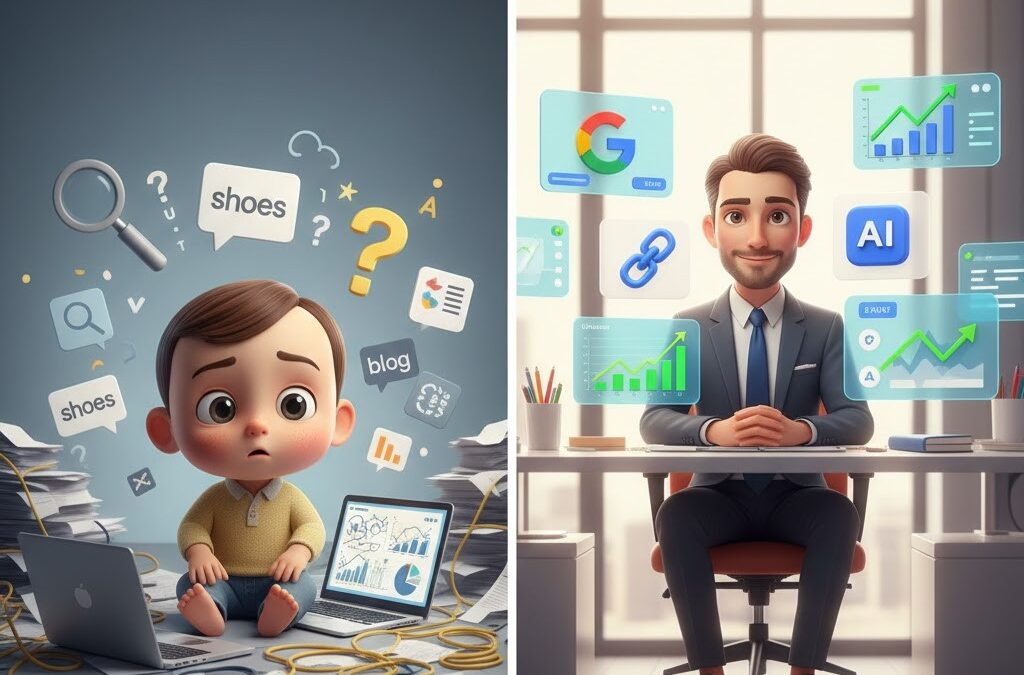
AEO Summary
SEO basics for beginners in 2026 are no longer just about ranking websites on Google. SEO now focuses on visibility across search engines, AI answer tools, social platforms, videos, and voice search. Beginners must understand search intent, content quality, user experience, and AI-driven discovery to succeed in modern SEO.
Introduction: Why SEO Basics Look Very Different in 2026
If you are starting your SEO journey today, you are not late.
But you are entering a very different SEO world than what most old blogs describe.
In 2026:
- People search on Google, YouTube, Instagram, TikTok, and AI tools
- AI answers appear before traditional blue links
- Voice search and conversational queries are normal
- Search engines care more about helpfulness than tricks
This is why learning SEO basics for beginners using outdated tactics will not work anymore.
This guide is written for:
- Beginners learning SEO for the first time
- Students and career switchers
- Small business owners
- Freelancers and marketers
No jargon. No shortcuts. No outdated hacks.
Just clear, practical SEO basics for beginners, explained for how search really works in 2026.
What Is SEO in 2026? (Beginner-Friendly Explanation)
SEO stands for Search Engine Optimization.
But in 2026, SEO means something bigger.
SEO is the process of making your content easy to discover, understand, and trust across search engines and AI systems.
That includes:
- Google Search
- Google AI Overviews (SGE)
- ChatGPT, Gemini, Perplexity
- YouTube search
- Social platform discovery
- Voice assistants
So when we talk about SEO basics for beginners, we are not talking only about websites.
We are talking about search visibility everywhere.
How Search Works Today (Simple Explanation)
Before learning tactics, beginners must understand how search actually works.
Step 1: A User Has a Question or Need
Examples:
- “Best SEO course for beginners”
- “How to get more website traffic”
- “SEO basics for beginners explained simply”
These are called search queries.
Step 2: Search Engines and AI Analyze Intent
Search systems try to understand:
- What does the user want?
- Are they learning, buying, comparing, or solving a problem?
This is called search intent, and it is one of the most important SEO basics for beginners.
Step 3: Systems Evaluate Content
Google and AI tools check:
- Is the content helpful?
- Is it clear and structured?
- Is it trustworthy?
- Does it answer the question fully?
Step 4: Results Are Shown
Results may include:
- Blog articles
- Videos
- AI-generated summaries
- Featured snippets
- Voice answers
Your goal in SEO is not to trick the system, but to serve the user better than others.
Why SEO Basics for Beginners Matter More Than Ever
Some people say SEO is dead.
That is not true.
What is dead is:
- Keyword stuffing
- Low-quality content
- Copy-paste blogs
- Writing only for bots
SEO basics for beginners now focus on:
- Real value
- Clear explanations
- Trust and experience
- Multi-platform visibility
If you learn SEO correctly in 2026, you gain:
- Long-term traffic
- Career opportunities
- Business growth
- Authority and trust
Core Pillars of SEO Basics for Beginners
To make SEO simple, beginners should understand four main pillars.
1. Search Intent (The Foundation of SEO)
Search intent answers one question:
Why is someone searching this?
There are four main types:
Informational Intent
User wants to learn.
Example: “SEO basics for beginners”
User wants a specific site.
Example: “Google Search Console login”
Commercial Intent
User is comparing options.
Example: “Best SEO tools for beginners”
Transactional Intent
User wants to take action.
Example: “Buy SEO course online”
Modern SEO starts with intent, not keywords.
2. Content Quality (Helpful Content Wins)
In 2026, content must be:
- Clear
- Honest
- Useful
- Easy to understand
Google’s Helpful Content system and AI engines reward:
- First-hand experience
- Step-by-step explanations
- Clear structure
- Real examples
Thin content does not survive anymore.
This is a critical lesson in SEO basics for beginners.
3. Technical Foundation (Beginner Level)
You do not need to be a developer.
But beginners should understand basics like:
- Pages must load fast
- Websites must work on mobile
- URLs should be clean
- Pages must be crawlable
We will cover technical SEO basics in later sections.
4. Trust and Experience (E-E-A-T)
Google and AI engines evaluate:
- Experience
- Expertise
- Authoritativeness
- Trustworthiness
For beginners, this means:
- Be honest
- Share what you know
- Avoid fake claims
- Build credibility slowly
SEO is not about pretending to be an expert.
It is about earning trust over time.
Keywords in 2026: What Beginners Must Know
Keywords still matter.
But how you use them has changed.
What Is a Keyword?
A keyword is a word or phrase people type or say when searching.
Example:
- “SEO basics for beginners”
- “How to learn SEO in 2026”
How Keywords Are Used Today
Search engines now understand:
- Synonyms
- Context
- Meaning
- Related concepts
This is called semantic SEO.
So instead of repeating the same keyword unnaturally, you:
- Explain the topic fully
- Use related terms naturally
- Answer follow-up questions
That is why this guide uses SEO basics for beginners naturally throughout the content.
Primary and LSI Keywords Explained (Beginner-Friendly)
Primary Keyword
Main topic of the page.
Example:
- SEO basics for beginners
LSI Keywords (Related Terms)
Supporting words that help search engines understand context.
Examples:
- search engine optimization basics
- beginner SEO guide
- SEO fundamentals
- how search engines work
- on-page SEO basics
Using LSI keywords improves:
- Ranking
- AI understanding
- Voice search relevance
On-Page SEO Basics for Beginners (Introduction)
On-page SEO means optimizing what is on the page.
This includes:
- Title
- Headings
- Content
- Images
- Internal links
In 2026, on-page SEO focuses on clarity, not manipulation.
Title Optimization (Beginner Rule)
A good title:
- Clearly states the topic
- Matches search intent
- Feels human, not robotic
Example:
Learning SEO Basics for Beginners in 2026? Read This First
This title:
- Includes the main keyword
- Signals freshness
- Matches beginner intent
Headings Matter More Than Ever
Headings help:
- Users scan content
- AI understand structure
- Voice assistants find answers
Beginner rule:
- One clear H1
- Logical H2 and H3 sections
- Questions work very well
This article follows that structure intentionally.
Content Structure for Beginners (Simple Framework)
Every SEO-friendly article should have:
- Clear introduction
- Logical sections
- Short paragraphs
- Simple language
- Clear takeaways
This structure helps:
- Readers
- AI tools
- Voice search
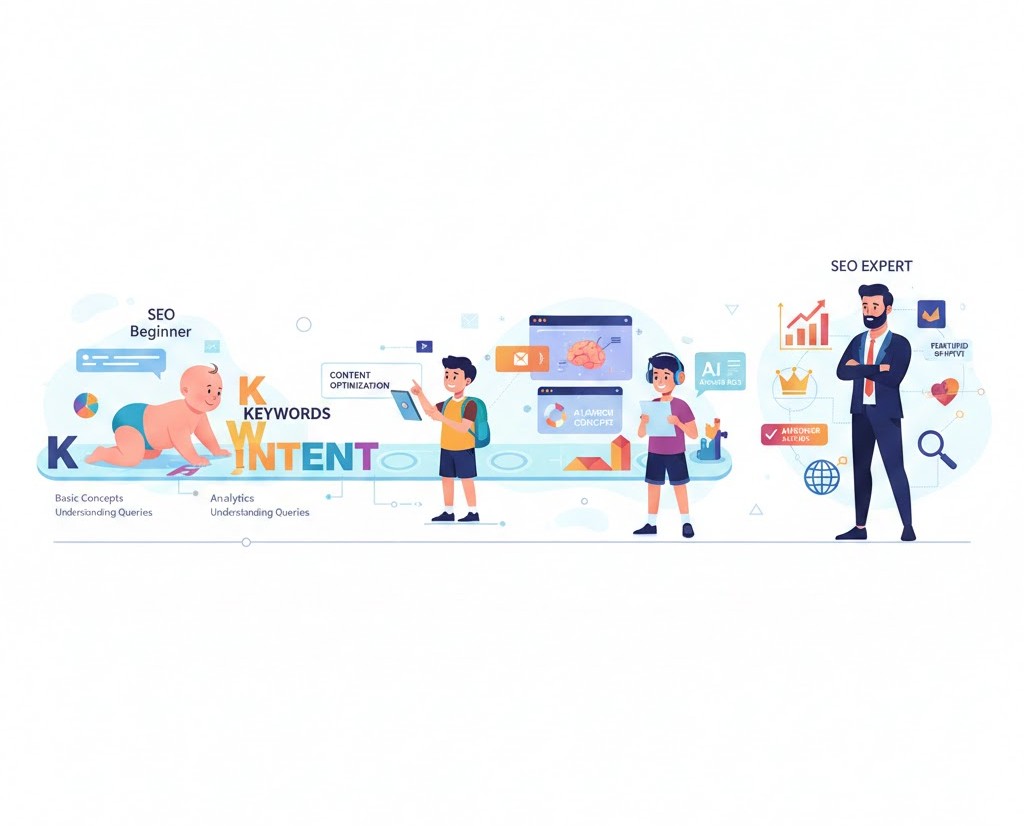
SEO Basics for Beginners and AI Search
AI tools like ChatGPT and Perplexity do not “rank” content like Google.
They extract, summarize, and recommend content.
They prefer content that is:
- Well-structured
- Clear
- Fact-based
- Easy to explain
This is why modern SEO writing focuses on:
- Explanations
- Definitions
- Step-by-step guidance
Common SEO Myths Beginners Must Ignore
Myth 1: SEO Is Just Keywords
False. SEO is about helpfulness and intent.
Myth 2: SEO Gives Instant Results
False. SEO is long-term.
Myth 3: AI Has Killed SEO
False. AI has expanded SEO.
Myth 4: You Need Expensive Tools
False. Beginners can start with free tools.
Understanding these myths is part of mastering SEO basics for beginners.
What Beginners Should Focus on First
If you are overwhelmed, focus on this order:
- Learn how search works
- Understand user intent
- Create helpful content
- Learn basic on-page SEO
- Improve gradually
Do not try to learn everything at once.
Off-Page SEO Basics for Beginners (2026 Perspective)
Off-page SEO refers to signals outside your website that help search engines and AI systems trust your content.
In simple words:
Off-page SEO answers this question:
Do others trust and reference your content?
What Matters in Off-Page SEO Today
In 2026, off-page SEO is less about quantity and more about quality and relevance.
What matters most:
- Genuine backlinks
- Brand mentions
- Content being referenced across platforms
- Trust signals
For beginners, this means earning attention, not buying links.
Backlink Basics for Beginners (Safe & Practical)
A backlink is a link from another website to your website.
Search engines treat backlinks like recommendations.
Beginner-Friendly Backlink Strategies
- Write helpful blog content others want to reference
- Share insights on LinkedIn and Medium
- Guest post on relevant blogs (value-first)
- Answer questions on forums and communities
- Build personal and brand authority
Avoid shortcuts like:
- Buying links
- Link farms
- Spam comments
These harm SEO long-term.
SEO Basics for Beginners and Social Platforms
In 2026, social platforms are part of search.
Search engines index:
- Instagram captions
- YouTube titles
- Video descriptions
- Hashtags
- Engagement signals
SEO basics for beginners now include:
- Writing searchable captions
- Using intent-based hashtags
- Optimizing video titles
- Consistent messaging across platforms
SEO is no longer platform-limited.
Measuring SEO Success (Beginner Metrics That Matter)
Beginners often track the wrong metrics.
Here is what actually matters.
Key SEO Metrics for Beginners
- Organic traffic growth
- Keyword visibility (not just rankings)
- Click-through rate
- Engagement (time on page, bounce rate)
- Indexing and impressions
Rankings alone do not tell the full story.
SEO Tools Beginners Can Trust
You do not need many tools.
Start simple.
Free and Beginner-Friendly Tools
- Google Search Console
- Google Analytics
- Google Keyword Planner
- Google Trends
- AnswerThePublic
These tools are enough to master SEO basics for beginners.
SEO Learning Roadmap for Beginners (2026)
If you are starting from zero, follow this order:
- Understand how search works
- Learn SEO basics for beginners conceptually
- Practice on your own website
- Write helpful content
- Learn keyword research
- Apply on-page SEO
- Measure and improve
- Expand into AI and multi-platform SEO
SEO rewards consistency, not speed.
SEO as a Career in 2026 (Beginner Insight)
SEO is not dying.
It is evolving.
SEO roles now require:
- Strategic thinking
- Content understanding
- AI awareness
- Cross-platform optimization
If you master SEO basics for beginners properly, you can grow into:
- SEO strategist
- Content SEO specialist
- Growth marketer
- AI search optimizer
25 FAQs: SEO Basics for Beginners (People Also Ask Style)
1. What are SEO basics for beginners?
SEO basics for beginners include understanding search intent, keywords, content quality, on-page optimization, and how search engines rank content.
2. Is SEO still worth learning in 2026?
Yes. SEO is more valuable than ever because search now includes AI tools, social platforms, and voice search.
3. How long does SEO take to show results?
SEO usually takes 3 to 6 months to show meaningful results, depending on competition and consistency.
4. Can beginners learn SEO without technical skills?
Yes. Most SEO basics for beginners do not require coding. Basic understanding is enough to start.
5. What is the most important SEO factor today?
Search intent and content helpfulness are the most important ranking factors today.
6. Is keyword research still important?
Yes, but keyword research now focuses on intent and topic coverage, not just search volume.
7. How many keywords should beginners target per page?
One primary keyword and several related keywords are enough for one strong page.
8. What is on-page SEO in simple terms?
On-page SEO means optimizing content, titles, headings, and structure to help users and search engines understand the page.
9. Do backlinks still matter in SEO?
Yes. High-quality, relevant backlinks still help build trust and authority.
(Reference: Google Search Central documentation)
External link suggestion: https://developers.google.com/search/docs
10. What is technical SEO for beginners?
Technical SEO includes site speed, mobile friendliness, indexing, and crawlability.
11. Can SEO work without a blog?
Yes. Service pages, videos, and social content can also be optimized using SEO basics for beginners.
12. Is AI replacing SEO?
No. AI is changing SEO, not replacing it. SEO now includes AI answer optimization.
13. What is AEO in SEO?
AEO means Answer Engine Optimization, where content is optimized for AI-generated answers.
14. How does voice search affect SEO?
Voice search favors conversational queries and clear answers, which beginners should focus on.
15. What is semantic SEO?
Semantic SEO focuses on topic depth and meaning instead of repeating keywords.
16. Are SEO tools mandatory for beginners?
No. Free tools are enough when learning SEO basics for beginners.
17. How important is content length?
Content length matters less than content quality and completeness.
18. Can small businesses benefit from SEO?
Yes. SEO is one of the most cost-effective long-term marketing channels for small businesses.
(Reference: Small business SEO insights by Moz)
External link suggestion: https://moz.com/beginners-guide-to-seo
19. Should beginners focus on Google only?
No. Beginners should optimize for Google, AI tools, and social platforms together.
20. What is the biggest SEO mistake beginners make?
Writing content without understanding search intent.
21. How often should SEO content be updated?
SEO content should be reviewed and updated every 6 to 12 months.
Indirectly yes. Social content improves visibility, engagement, and brand signals.
23. Can beginners do SEO alone?
Yes. SEO basics for beginners are designed for self-learning and practice.
24. Is SEO a long-term skill?
Yes. SEO compounds over time and grows stronger with experience.
25. Is SEO recommended by small business owners?
Yes. Many small business owners recommend SEO as a sustainable growth channel when budgets are limited.
Final Conclusion: SEO Basics for Beginners in 2026
SEO in 2026 is not about tricks, hacks, or shortcuts.
It is about clarity, usefulness, and trust.
When beginners understand:
- How search works
- What users actually want
- How AI systems surface answers
- How content builds authority
SEO becomes a long-term asset, not a guessing game.
If you are learning SEO basics for beginners today, you are building skills that will remain valuable across websites, AI platforms, and future search experiences.
If you want to explore practical SEO strategies, AI-driven search optimization, and real-world case studies, visit my in-depth resources here: Digital Geetha
This is where theory turns into execution.