Short Summary
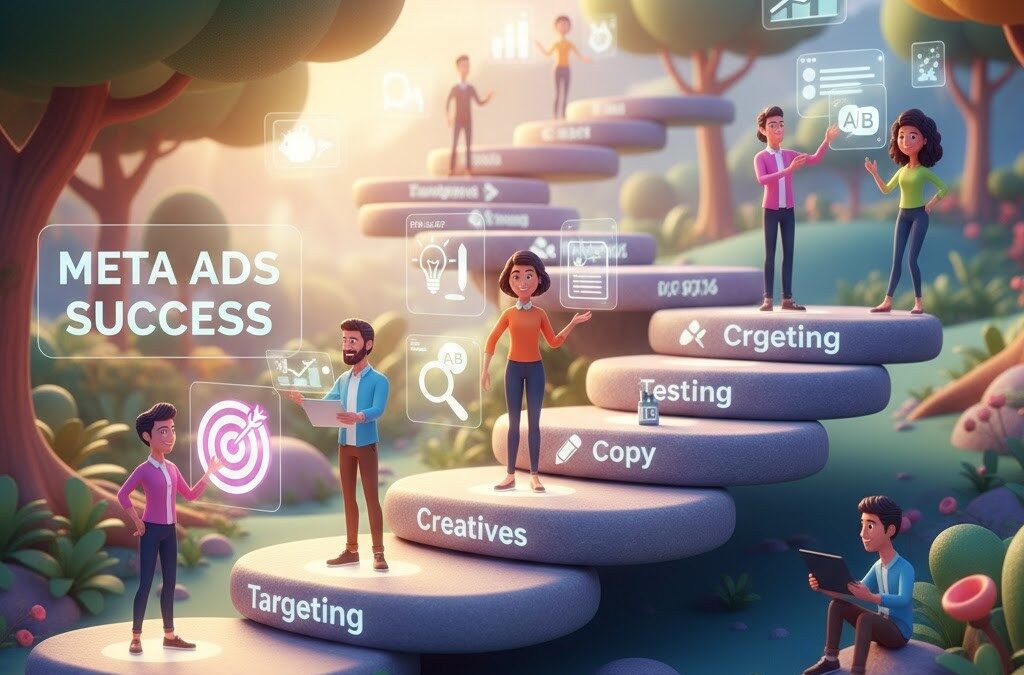
A strong Meta Ads creative strategy is the foundation of profitable advertising on Facebook and Instagram. It involves understanding your audience deeply, crafting visuals that stop the scroll, writing clear messages, and testing different creative formats to find what consistently converts. The right creative approach enhances CTR, reduces CPC, boosts ROAS, and enables brands to scale with predictable results.
Contents
- 1 Introduction
- 2 Why Creative Strategy Matters More Than Targeting
- 3 Core Elements of a High-Converting Meta Ads Creative Strategy
- 4 1. Know Your Audience Deeply
- 5 2. Creative Concepts and Angles
- 6 3. Create a Strong Hook
- 7 4. Visual Design That Stops the Scroll
- 8 5. Storytelling That Creates Emotion
- 9 6. Copywriting That Drives Action
- 10 7. Use Multiple Creative Formats
- 11 8. Build a Creative Testing System
- 12 9. Identify Winners and Scale Them
- 13 10. Constant Creative Refresh (Avoiding Ad Fatigue)
- 14 11. Building a Creative Production System
- 15 12. The Role of UGC in Meta Ads Creative Strategy
- 16 13. High-Converting Creative Templates
- 17 14. What Meta Recommends for Best Creatives
- 18 15. Offer Strategy: Your Creative Is Only as Strong as Your Offer
- 19 16. Data-Driven Creative Decisions
- 20 17. Psychological Triggers That Improve Ad Performance
- 21 18. Using A/B Testing to Refine Creative
- 22 19. Carousel Ads Strategy
- 23 20. How to Structure High-Converting Video Ads
- 24 21. Advanced Creative Angles for Consistent Results
- 25 22. Creative Frameworks for All Industries
- 26 23. What Meta’s Own Research Says About Creatives
- 27 24. Creative Personalization
- 28 25. Seasonal & Trend-Based Creative Strategy
- 29 26. Back-End Creative Strategy (Landing Page + Ads)
- 30 27. Creating a Monthly Creative Calendar
- 31 28. Creative for Prospecting vs. Retargeting
- 32 29. Creative Scaling Strategy
- 33 30. Building a Long-Term Creative Strategy
- 34 Conclusion
- 35 FAQs (People Also Ask Style)
Introduction
Meta Ads have changed dramatically in the last few years. The platform has grown smarter, competition has increased, and users now expect high-quality content that feels real, relevant, and personal. As a result, what used to work earlier, random product photos, generic copy, or a simple boosted post, does not work anymore.
Today, brands need a structured Meta Ads creative strategy to succeed.
Your creative is now the strongest lever for performance. It controls how many people stop to look at your ad, how many click, and how many finally convert.
If your creative is strong, you win.
If your creative is weak, no targeting or budget can save the campaign.
This article explains how to build a Meta Ads creative strategy that produces consistent, reliable conversions, even when the algorithm or competition changes.
Why Creative Strategy Matters More Than Targeting
Years ago, advertisers relied heavily on interest targeting, lookalike audiences, and detailed segmentation. Today, Meta’s AI does most of the targeting automatically. What makes your ad stand out is your:
- Visuals
- Story
- Hook
- Message
- Format
- User experience
This shift means your creative strategy is responsible for over 70% of campaign performance.
When your creative is strong:
- Your CPM becomes cheaper
- Your CTR improves
- Your conversions increase
- Your cost per result drops
- Your ROAS becomes predictable
Good ads help Meta find the right customers. Poor ads confuse the system and waste your money.
Core Elements of a High-Converting Meta Ads Creative Strategy
A complete strategy includes the following pillars:
- Audience understanding
- Creative concepts
- Strong hooks
- Visual design
- Storytelling
- Messaging and copywriting
- Creative diversification
- Testing framework
- Creative optimization
- Scaling winners
Each pillar plays a different role, but together they create a creative system that stays profitable over time.
Let’s break down each element in detail.

1. Know Your Audience Deeply
A Meta Ads creative strategy begins with clarity about your audience.
You must understand:
- Their dreams
- Their frustrations
- Their desires
- Their fears
- Their objections
- Their daily life
- Their buying behaviour
Great ads feel personal.
When someone sees your ad, they should feel: “This is for me.”
Tools to understand your audience:
- Customer interviews
- Product reviews
- Competitor comments
- Google trends
- Meta audience insights
- Reddit discussions
- Industry forums
What to identify:
- What problem people want to solve
- What results they really want
- Why past solutions failed
- What emotions drive their buying decision
- What language do they use
Your creative should speak in their words, not in marketing language.
2. Creative Concepts and Angles
Before making any video or image, you need creative concepts.
A creative concept is the overall idea behind an ad.
It is the direction your ad takes to communicate your message.
Example concepts:
- Demonstration
- Before/after
- Problem → Agitation → Solution
- Unboxing
- Behind the scenes
- Founder story
- Customer testimonial
- Lifestyle showcase
When a brand uses the same concept again and again, ad fatigue appears.
So your Meta Ads creative strategy must include multiple angles, such as:
- Emotional angle
- Practical angle
- Social proof angle
- Value angle
- Educational angle
- Fear of missing out angle
- Savings/discount angle
More angles mean more chances to find consistent winning creatives.
3. Create a Strong Hook
The hook decides whether someone watches the ad or scrolls away.
You have 1.5 seconds before a user scrolls.
A strong hook can increase engagement by 40–70%.
Powerful hook styles:
- A bold statement
- A surprising benefit
- A clear problem
- A quick transformation
- A shocking fact
- A relatable moment
- A visually striking scene
Examples:
- “Stop wasting money on creams that don’t work.”
- “This simple method changed my skin in 7 days.”
- “What no one tells you about managing back pain.”
Your hook must match the psychology of your audience.
4. Visual Design That Stops the Scroll
Your visual is the first thing people notice.
To build a high-performing visual strategy, keep these in mind:
Follow the platform’s native style:
- Looks like organic content
- Use real people and real settings
- Avoid heavy graphics or stock photos
- Make it feel natural, relatable, and human
Use visual techniques:
- Bright backgrounds
- High contrast
- Natural light
- Clear composition
- Soft motion
- Clean framing
Avoid:
- Over-editing
- Fake-looking models
- Distracting colors
- Overly graphic layouts
The goal is NOT to look like an ad.
The goal is to blend into the feed naturally and attract attention.
5. Storytelling That Creates Emotion
People don’t buy products.
People buy stories, emotions, and transformations.
A strong story structure for Meta Ads includes:
- Problem
- Experience
- Transformation
- Result
- Call to action
For example:
- A mother struggling with her child’s skin issues
- How she discovered a product
- How it improved her child’s condition
- Why she trusts it now
Simple, emotional stories convert better than complicated scripts.
6. Copywriting That Drives Action
Your creative needs clear, simple, persuasive copy.
Rules for Meta Ads copy:
- Use short sentences
- Use active voice
- Avoid jargon
- Address one main idea
- Make the offer clear
- Highlight one strong benefit
Include:
- What problem does it solve
- Why this product is different
- Why they should care
- What result will they get
- Why they should act now
Avoid:
- Sales-heavy language
- Overclaims
- Complex paragraphs
Good copy feels like a real conversation, not a sales pitch.
7. Use Multiple Creative Formats
Meta supports a wide range of formats:
- Short videos (5–15 seconds)
- Long videos (20–45 seconds)
- Reels-style videos
- Image ads
- Carousels
- Static creatives with strong headlines
- UGC-style creatives
- Motion graphics
- Lifestyle photography
A complete Meta Ads creative strategy must include at least:
- 2–3 video formats
- 2 image styles
- 1 carousel
- 1 testimonial creative
- 1 educational creative
- 1 offer-based creative
More formats give Meta more options to find the best-performing audiences.
8. Build a Creative Testing System
Testing is the heart of a successful Meta Ads creative strategy.
You should test:
- Hooks
- Angles
- Visual styles
- Concepts
- Copy variations
- Durations
- Backgrounds
- Models
- Settings
How to test:
- Test 3–5 creatives at a time
- Keep the budget equal
- Allow 3–5 days for learning
- Judge based on CPM, CTR, CPC, and cost per add-to-cart/purchase
This gives clarity on what works before scaling.
9. Identify Winners and Scale Them
A winning creative stays stable for 7–21 days with:
- Low cost per result
- High CTR
- Strong engagement
- Stable ROAS
- Low CPM
Scaling methods:
- Increase budget slowly
- Duplicate into new ad sets
- Expand to new audiences
- Replicate winning angles
- Refresh thumbnails
- Extend video versions
Scaling only works if your creative is excellent.
10. Constant Creative Refresh (Avoiding Ad Fatigue)
Even the best ads stop working eventually.
People see the same ad again and again.
Performance drops.
Costs rise.
This is called ad fatigue.
To avoid it:
- Refresh creatives every 2–4 weeks
- Change hooks
- Change colour schemes
- Introduce new models
- Add new backgrounds
- Use seasonal themes
- Update offers
A brand that refreshes creatives consistently wins over brands that run the same ads for months.
11. Building a Creative Production System
A creative system helps you produce ads consistently.
It should include:
- A monthly creative plan
- Fixed number of videos each month
- Regular testing framework
- Storyboards
- Scripts
- A UGC creator list
- Content shoots
- Editing workflow
- Performance review meetings
Brands that plan their creative production see consistent results. can check Meta Creative Hubs
12. The Role of UGC in Meta Ads Creative Strategy
UGC (User-Generated Content) has become the top-performing style of Meta creatives.
Why UGC works:
- Feels real
- Builds trust
- Shows real experiences
- Matches social media culture
- Creates emotional connection
Types of UGC:
- Product reviews
- Demonstrations
- Try-ons
- Tutorials
- Unboxing videos
- Before/after videos
- Problem-solution videos
Most brands generate their highest ROAS from UGC-style creatives.
13. High-Converting Creative Templates
These templates can be applied across industries.
Template 1: Problem → Experience → Solution
- Show the user’s pain
- Show the product being used
- Show the result
- Add a simple CTA
Template 2: Social Proof Boost
- “Over 50,000 happy customers.”
- Quick testimonials
- Product demo
- Call to action
Template 3: Founder Story
- Why the brand was created
- The mission
- What makes it unique
- Strong offer
Template 4: Value Education
- Tell users something useful
- Connect the problem to the product
- Show benefit
- Encourage action
14. What Meta Recommends for Best Creatives
According to Meta’s internal performance data, high-performing ads often include:
- Human presence
- Real environments
- Clear product visibility
- Simple backgrounds
- Subtle animations
- Clear benefit demonstration
- Short scenes (1–2 seconds each)
- Strong text overlays
- Native Reels-style editing
Following these recommendations improves performance across all verticals.
15. Offer Strategy: Your Creative Is Only as Strong as Your Offer
Even the best creative fails if the offer is weak.
A powerful offer increases conversions without increasing ad spend.
Strong offers include:
- Percentage discount
- Bundle offers
- Limited-time deals
- Free gift with purchase
- Free consultation
- Buy 1 get 1
- Free shipping
- Money-back guarantee
Your Meta Ads creative strategy should highlight:
- What the offer is
- Why it’s special
- Why it’s time-sensitive
Example:
“40% off ends in 24 hours. Last chance to shop.”
Clear, simple, urgent.
16. Data-Driven Creative Decisions
Creative decisions should not be based on guessing.
They should be based on metrics.
The main KPIs to monitor:
Primary Creative KPIs
- Thumb-stop ratio (3-second view rate)
- CTR (link click-through rate)
- CVR (conversion rate)
- CPC (cost per click)
- CPM (cost per 1000 impressions)
Secondary Creative KPIs
- Add-to-cart rate
- Time on site
- Video completion rate
- ROAS
What each metric tells you:
- Low CTR → Creative is not appealing
- High CPC → Creative is not clickable
- Low view rate → Hook is weak
- Low conversion rate → Message or offer is unclear
- High CPM → Creative is not attracting the right users
Data is the foundation of long-term creative success.
17. Psychological Triggers That Improve Ad Performance
People buy because of emotions, not logic.
Using psychological triggers in your Meta Ads creative strategy helps increase conversions.
Best triggers for Meta Ads:
- Social proof
- Scarcity
- Curiosity
- Authority
- Trust
- Fear of missing out (FOMO)
- Simplicity
- Relatability
- Aspirational lifestyle
- Transformation promise
Example:
“Join 25,000 women who switched to chemical-free skincare.”
Uses social proof, relatability, and trust together.
18. Using A/B Testing to Refine Creative
A/B testing helps you find the best-performing creative variations.
What to A/B test:
- Two hooks
- Two backgrounds
- Two models
- Two versions of the same video
- Two thumbnails
- Two copy styles
- Two offers
Simple A/B test structure:
- Ad Set A → Creative 1
- Ad Set B → Creative 2
- Same audience
- Same budget
- Run for 3–5 days
Look for:
- Higher CTR
- Lower CPC
- Stronger conversion rate
Only scale the winner.
19. Carousel Ads Strategy
Carousel ads are powerful for storytelling and product showcases.
Best use cases:
- Clothing
- Skincare
- Travel
- Restaurants
- Coaching
- E-commerce product bundles
Carousel best practices:
- Use one strong color theme
- Make the first card visually strong
- Add clear text overlays
- Tell a simple story card-by-card
- Highlight benefits, not features
Example story structure:
- Card 1: Problem
- Card 2: Solution
- Card 3: Benefits
- Card 4: Social proof
- Card 5: Strong CTA
Carousel ads often produce low CPCs and high engagement.
20. How to Structure High-Converting Video Ads
Video ads perform better when they follow a proven structure.
The 5-part structure:
- Hook (first 1–3 seconds)
- Problem or desire
- Product introduction
- Benefits and proof
- Call to action
Why this works:
- Hook grabs attention
- Problem builds emotional tension
- Product provides solution
- Benefits create excitement
- CTA tells the user what to do next
Video length guide:
- Short ads: 7–15 seconds
- Medium ads: 20–30 seconds
- Long ads: 35–45 seconds
Short ads get high views.
Long ads get high conversions.
21. Advanced Creative Angles for Consistent Results
Most brands use basic concepts.
But advanced angles help you stand out.
Homestyle UGC Angle
Creator shoots video at home to feel natural.
Reaction Angle
User reacts to the product with emotion.
Challenge Angle
Show a transformation challenge (7 days, 30 days).
Scientific Angle
Show ingredients, technology, or testing process.
Cost-Savings Angle
Explain why the product saves money over time.
Community Angle
Highlight your brand movement, not just product.
Using different angles reduces fatigue and improves audience reach.
22. Creative Frameworks for All Industries
A strong Meta Ads creative strategy works across industries.
E-commerce Creative Framework
- Show product in use
- Highlight transformation
- Add social proof
- Show offer
Local Business Creative Framework
- Showcase service
- Add before/after
- Add testimonials
- Add location details
Coaching / Education Framework
- Identify pain point
- Show what the student will learn
- Add social proof
- Add CTA
Beauty / Skincare Framework
- Close-up visuals
- Texture shots
- Problem-solution
- Real results
Fashion Framework
- Real models
- Movement shots
- Outfit close-ups
- Lifestyle scenes
Each industry needs a slightly different creative approach.
23. What Meta’s Own Research Says About Creatives
According to Meta’s published insights:
Winning ads:
- Include human faces
- Use movement in the first frame
- Use bright environments
- Keep text minimal
- Stick to 3–5 scenes
- Avoid hard selling
- Use native camera formats
- Optimize for sound off
Meta recommends:
- Use 9:16 format for Reels
- Use 1080×1920 resolution
- Use high contrast backgrounds
- Use captions and on-screen text
- Keep visuals clean and simple
Following platform guidelines boosts performance instantly.
24. Creative Personalization
Personalized ads perform better because people feel seen.
Personalization examples:
- Show different models for different age groups
- Customize messaging for men vs women
- Show different cultural backgrounds
- Show different product variations
Meta uses AI to deliver creatives to the right audience.
You just need to supply enough variety.
25. Seasonal & Trend-Based Creative Strategy
Seasonal ads get higher engagement.
Examples:
- New Year
- Valentine’s Day
- Ramadan
- Summer sale
- Festive shopping
- End-of-season sale
Your Meta Ads creative strategy should include:
- Seasonal colors
- Seasonal copy
- Relevant hooks
- Time-sensitive offers
This boosts conversions during peak buying times.
26. Back-End Creative Strategy (Landing Page + Ads)
Your creative does not end with the ad.
Your landing page must match your ad.
Ensure:
- Same colours
- Same message
- Same offer
- Same product images
- Same promises
Mismatch reduces conversions.
Convert more with:
- Clear headlines
- Benefit-focused points
- Real images
- Short sections
- Fast loading pages
Good creatives require good landing pages.
27. Creating a Monthly Creative Calendar
A structured monthly plan keeps performance stable.
Your monthly calendar should include:
- 4–6 new video ads
- 3–5 new static images
- 1–2 carousel creatives
- 2–3 UGC videos
- 1 seasonal creative
- 1 storytelling ad
- 1 retargeting creative
This provides enough variety for testing and scaling.
28. Creative for Prospecting vs. Retargeting
Different audiences require different creative strategies.
Prospecting Creative:
- Educational
- Value-driven
- Emotion-focused
- Light storytelling
- High-quality visuals
Retargeting Creative:
- Offer-based
- Social proof
- Testimonials
- UGC reviews
- Comparison ads
- Guarantee-based ads
Retargeting creatives are more direct and conversion-focused.
29. Creative Scaling Strategy
After finding winning creatives, scale them using:
Strategy 1: Vertical Scaling
- Increase budget 20–30% every 3 days
- Duplicate adset with a higher budget
Strategy 2: Horizontal Scaling
- Target new countries
- Test new audiences
- Add interest clusters
- Use lookalike variations
Strategy 3: Creative Scaling
- Create new versions of the winning creative
- Re-edit with new hook
- Change background colour
- Add new testimonial
Creative scaling is the safest and most effective way to grow consistently.
30. Building a Long-Term Creative Strategy
Your goal is not a single winning ad.
Your goal is creative consistency.
Long-term creative habits:
- Weekly creative review
- Monthly production
- Quarterly testing framework
- Continuous refresh
- Tracking historical learnings
- Noticing patterns
- Repeating what works
Brands that focus on long-term creative growth dominate their market.
Conclusion
A strong Meta Ads creative strategy is the most important part of successful Facebook and Instagram advertising. It helps you reduce costs, increase conversions, and scale smoothly. The key is to understand your audience, develop multiple concepts, use strong hooks, follow psychological triggers, create professional visuals, and test everything consistently. With this approach, businesses can build ads that convert predictably, even when competition rises or targeting changes. we can use Sprout Social for social media strategy resources.
A systematic creative strategy beats random creative experiments every time. If you build creatives with intention, clarity, and structure, your Meta Ads can deliver results that grow your business every single month.
Want better rankings and better conversions? Connect with me here: digitalgeetha.https://digitalgeetha.com/com
FAQs (People Also Ask Style)
1. What is a Meta Ads creative strategy?
It is a structured plan for creating high-performing visuals, videos, hooks, messages, and concepts that improve conversions and reduce ad costs.
2. Why is creative so important in Meta Ads?
Creative is now responsible for over 70% of campaign performance because Meta’s AI handles most targeting.
3. How often should I refresh my Meta Ads creative?
Every 2–4 weeks to avoid fatigue and keep performance stable.
4. What type of creative converts best on Meta?
UGC videos, short videos with strong hooks, carousels, and clean lifestyle images.
5. What is the ideal length for Meta video ads?
7–15 seconds for attention, 20–45 seconds for conversions.
6. Should I use real people or models in ads?
Real people perform better because they feel authentic and relatable.
7. How many creatives should I test?
Test 3–5 at a time for the best learning.
8. What makes a hook effective?
It grabs attention in the first 1–3 seconds by speaking directly to a desire or problem.
9. What KPIs show if my creative is working?
CTR, CPC, CPM, conversion rate, and thumb-stop ratio.
10. Does UGC work for all industries?
Yes. It works because it feels natural and trustworthy.
11. What is creative fatigue?
When people see the same ad repeatedly, causing performance to drop.
12. What formats perform best on Instagram?
Reels, 9:16 videos, clean images, and lifestyle visuals.
13. Should I use text on images?
Yes, but keep it minimal and easy to read.
14. How do I scale winning creatives?
Increase budget slowly, expand audiences, and create variations.
15. What makes a good offer in Meta Ads?
Clear, simple, time-sensitive offers with real value.
16. Is a landing page important for creative strategy?
Yes. It must match the ad for higher conversions.
17. How do I choose creative angles?
Base them on audience pain points, desires, and objections.
18. Can I use the same creative for prospecting and retargeting?
Not recommended; each audience needs different messaging.
19. How do I reduce ad costs?
Use strong hooks, high-quality creatives, and test multiple formats.
20. What is the fastest way to improve Meta Ads?
Improve your creative. It gives the biggest performance lift.