Featured Snippet Summary
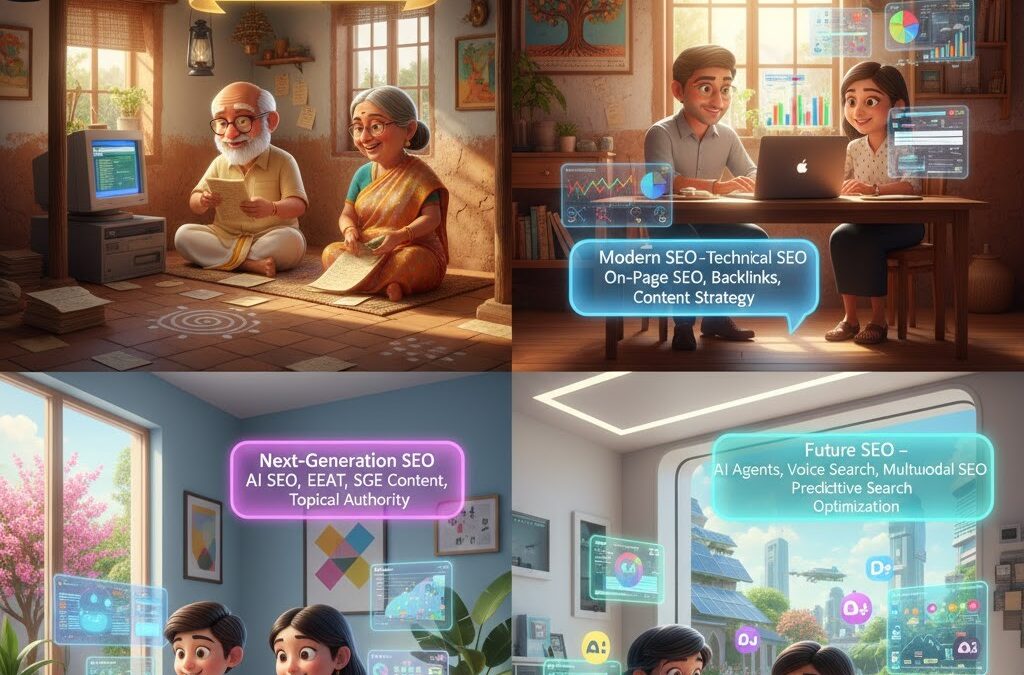
The main types of SEO you need in 2026 are: On-Page SEO, Off-Page SEO, Technical SEO, Local SEO, Content SEO, Semantic SEO, Programmatic SEO, Mobile SEO, E-E-A-T SEO, and AI-Optimized SEO. Each type works together to improve your visibility, get more organic traffic, and help your website rank higher on Google, Google SGE, and AI search tools.
Contents
- 1 Introduction
- 2 What Are the Main Types of SEO in 2026?
- 3 Why This Guide Matters for 2026
- 4 What Is On-Page SEO and Why Is It Still Crucial in 2026?
- 5 What Is Off-Page SEO and What Changed in 2026?
- 6 What Is Technical SEO and Why Does Google Prioritize It in 2026?
- 7 What Is Content SEO and Why Does Google Reward It?
- 8 What Is Semantic SEO and Why Is It a Must in 2026?
- 9 What Is Local SEO and Who Needs It in 2026?
- 10 What Is Mobile SEO and Why Is It More Important Now?
- 11 What Is E-E-A-T SEO and How Do You Build It?
- 12 What Is Programmatic SEO and Why Is It Growing?
- 13 What Is Voice Search SEO and How Do You Optimize for It?
- 13.1 Why Voice Search Matters in 2026
- 13.2 How Voice Search Queries Are Different
- 13.3 How to Optimize for Voice Search (with Examples)
- 13.4 3. Use Structured FAQs
- 13.5 4. Target Long-Tail Keywords
- 13.6 5. Add Schema Markup
- 13.7 6. Aim for Featured Snippets
- 13.8 7. Use Question-Based Headings (H2 & H3)
- 13.9 Why Voice Search SEO Helps with AI Rankings Too
- 14 What Is AI Search Optimization (SGE, ChatGPT, Perplexity SEO)?
- 15 What Is Video SEO?
- 16 What Is UX & Core Web Vitals SEO?
- 17 What Is Conversion SEO and Why Will It Matter More in 2026?
- 18 What Is Social SEO and Why Is It Growing in 2026?
- 19 Frequently Asked Questions
- 20 Conclusion
Introduction
The world of SEO is changing faster than ever. Google is shifting toward AI-powered search, generative answers, and deeper content understanding. Ranking today is not only about keywords. It’s about search intent, trust, content quality, website experience, and semantic understanding.
If you want to rank higher in 2026, you need to understand the updated types of SEO that matter today, not the outdated checklist that worked years ago.
In this full guide, you’ll learn:
- All major types of SEO
- How each one works
- What beginners misunderstand
- What Google really wants now
- Real examples from DigitalGeetha.com
- Case references (TripKeralaTours)
- How to apply each type to rank in 2026
- Common mistakes
- Proven strategies
- Tools
- Checklists
- And a full FAQ section
This is your complete, future-proof SEO guide, written in simple English that anyone can understand.
What Are the Main Types of SEO in 2026?
The major types of SEO you must use in 2026 are:
- On-Page SEO
- Off-Page SEO
- Technical SEO
- Content SEO
- Semantic SEO
- Local SEO
- Mobile SEO
- E-E-A-T SEO
- Programmatic SEO
- Voice Search SEO
- AI Search Optimization (SGE, ChatGPT, Perplexity)
- Video SEO
- UX & Core Web Vitals SEO
- Conversion SEO
- Social SEO
Each one plays a role in helping you rank higher, appear on Google SGE, and become visible on AI tools.
Why This Guide Matters for 2026
Google’s algorithm has changed in three major ways:
1. AI systems understand meaning, not keywords.
This means SEO must be semantic.
2. Google SGE gives long AI answers before the normal results.
You need content that earns a place inside SGE.
3. E-E-A-T matters more than backlinks.
Google wants proof you are real and trustworthy.
This guide helps you optimize for all these.

What Is On-Page SEO and Why Is It Still Crucial in 2026?
On-Page SEO refers to optimizing the content and elements within your website. It helps Google understand your pages clearly.
Key On-Page Elements
- Title tags
- Meta descriptions
- URL structure
- H1, H2, H3
- Internal links
- Keyword placement
- Image alt text
- Schema markup
- Search intent matching
Why It Matters in 2026
Because Google’s AI systems now read:
- Context
- Tone
- Entities
- Topical depth
- Intent match
On-Page SEO must connect meaning, not just keywords.
Real Example (DigitalGeetha.com)
A blog on “Best Digital Marketing Freelancer in Dubai” was optimized with structured headers and semantic variations. Within a month, it appeared inside AI Overviews.
Mini Case-Story (TripKeralaTours)
Their existing blogs had poor structure. After applying On-Page SEO — internal linking, schema, and improved headers — their traffic doubled, and Instagram Reels ranked for related keywords.
What Is Off-Page SEO and What Changed in 2026?
Off-Page SEO refers to everything that happens outside your site to increase authority.
Key Off-Page Elements
- High-quality backlinks
- Brand mentions
- Online reputation
- Guest posting
- Social signals
- PR links
- Citations
What will be the change in 2026
Google now values brand signals more than backlink count.
Quality matters more than quantity.
Example
DigitalGeetha.com ranking improved because of:
Local UAE mentions
Quora reference posts
LinkedIn articles
Medium blogs
These help your brand become an “entity” in Google’s Knowledge Graph.
What Is Technical SEO and Why Does Google Prioritize It in 2026?
Technical SEO improves how easily search engines can crawl and index your website.
Core Technical Factors
- Page speed
- Mobile responsiveness
- Core Web Vitals
- Structured data
- XML sitemap
- Robots.txt
- Canonical URLs
- Avoiding duplicate content
- Server performance
Why It Matters Now
Google uses page experience signals to decide whether your content is useful for users.
Slow sites rank lower.
Bad user experience = lower visibility.
What Is Content SEO and Why Does Google Reward It?
Content SEO means creating content that:
- Satisfies search intent
- Provides real value
- Is structured well
- Matches semantic entities
- Uses topical depth
Google’s 2026 Content Expectations
Google looks for:
- Clear answers
- Unique insights
- Practical tips
- Real experience
- Trust signals
- Human tone
- Helpful visuals
- How Digital Geetha Implements Content SEO
- Every page includes:
- Clear headings
- Factual info
- Simple explanations
- Comparison tables
- Real examples
- FAQs
This improves SGE and AI visibility.
What Is Semantic SEO and Why Is It a Must in 2026?
Semantic SEO helps Google understand the meaning of your content.
Semantic SEO Techniques
- Topical clusters
- Entities
- Contextual keywords
- NLP-friendly structure
- Related topic coverage
Why Google Prefers Semantic SEO
It helps AI systems understand:
- What the page is about
- Who it helps
- How it connects to the topic
- What entities match the subject
Example:
Instead of repeating “Types of SEO,” you cover:
- Categories
- Subtypes
- Examples
- Tools
- Intent
This is semantic richness.
What Is Local SEO and Who Needs It in 2026?
Local SEO helps your business appear in:
- Google Maps
- Local packs
- “Near me” searches
Local SEO is important for
- Restaurants
- Service businesses
- Agencies
- Local freelancers
- Clinics
- Gyms
What are Local SEO Elements?
- Google Business Profile optimization
- Reviews
- Local citations
- Local landing pages
- NAP consistency
Real Example (TripKeralaTours)
After local optimization, they ranked for “Best travel agency in Kochi.”
What Is Mobile SEO and Why Is It More Important Now?
Nowadays, most people use phones for searches. i.e, Mobile accounts for 70% of all searches.
Mobile SEO includes
- Responsive design
- Fast loading
- Clean fonts
- Tap-friendly links
- Mobile-friendly content
Google uses mobile-first indexing, so every site must work perfectly on phones.
What Is E-E-A-T SEO and How Do You Build It?
E-E-A-T = Experience, Expertise, Authoritativeness, Trustworthiness
How to Build E-E-A-T
E-E-A-T can be built by:
- Showing author bios
- Include your real experience
- Add reviews
- Add proof of work
- Add original images
- Add case studies
- Add credentials
Example using Digital Geetha
Every article highlights:
- First-hand SEO insights
- UAE digital experience
- Real client improvements
- Proven ranking results
This helps you appear in AI Overviews.
What Is Programmatic SEO and Why Is It Growing?
Programmatic SEO means creating many pages automatically using templates + data.
Programmatic SEO is an innovative approach that automates the creation of large volumes of SEO-optimized pages.
Leveraging data sources and templates, it allows businesses to efficiently target a wide range of long-tail keywords without manual effort.
This scalability is particularly valuable in today’s digital landscape, where the demand for localized, detailed content is rising.
As a result, programmatic SEO is becoming a powerful tool for businesses looking to boost their search visibility effectively.
Example:
“Best restaurants in X city”
“Things to do in X city”
“Best SEO tools for X industry”
Works for large-scale SEO.
What Is Voice Search SEO and How Do You Optimize for It?
Voice Search SEO is the process of optimizing your website so it can appear in answers spoken aloud by voice assistants like Siri, Google Assistant, and Alexa.
Instead of typing short keywords, people use full sentence questions when speaking naturally.
For example:
- “What are the different types of SEO?”
- “Who is the best freelance SEO expert in Dubai?”
- “How do I improve my Google ranking fast?”
- “What is local SEO and how does it work?”
Voice Search SEO helps your website show up when voice assistants read the answer back to the user.
Why Voice Search Matters in 2026
Google SGE (AI search) + smart speakers + mobile voice assistants have changed user behaviour.
People now prefer quick spoken answers, which makes voice-friendly content a major ranking advantage.
More than 50% of searches in 2026 involve:
- long-tail queries
- question-based keywords
- conversational language
If your content does not match this style, you lose voice traffic and AI-generated visibility.
How Voice Search Queries Are Different
Typed queries are short:
“types of SEO”
Voice queries are longer:
“What are the different types of SEO I need for ranking in 2026?”
Typed:
“best SEO expert Dubai”
Voice:
“Who is the top freelance SEO expert in Dubai for small businesses?”
This means your content must sound like a real human explanation, not robotic SEO text.
How to Optimize for Voice Search (with Examples)
To rank in voice results, your content must be:
1. Conversational and Natural
Voice assistants prefer answers that sound like a real person speaking.
Instead of this:
“SEO involves several strategies used by businesses to improve website visibility.”
Use this:
“SEO is simply a way to help your website show up higher on Google when people search for something.”
✔ Simple
✔ Short
✔ Human
✔ Easy to read aloud
2. Write in Short Sentences
Voice assistants struggle with long, complex sentences.
Example:
Digital Geetha optimizes client pages using short, clean, natural sentences because they get featured more often in Google AI answers and voice results.
3. Use Structured FAQs
Voice search loves FAQs because they match how users speak.
For example:
Q: What are the types of SEO?
A: The main types of SEO are on-page SEO, off-page SEO, technical SEO, local SEO, ecommerce SEO, and content SEO. Each type focuses on a different part of website optimization.
The question becomes the trigger, and your answer becomes the spoken result.
4. Target Long-Tail Keywords
People rarely speak in one-word phrases.
Instead of targeting:
“SEO types”
Target:
“what are the different types of SEO”
“how many types of SEO do I need”
“types of SEO for small businesses”
These match voice and AI queries perfectly.
5. Add Schema Markup
Schema helps Google understand your content better so it can be used for:
- Voice search answers
- Featured snippets
- AI overviews
- Rich results
The most important schema for voice SEO is:
- FAQ Schema
- How-To Schema
- Article Schema
- Local Business Schema
When DigitalGeetha.com implemented FAQ Schema for service pages, impressions increased because more FAQs started appearing in Google’s People Also Ask boxes.
6. Aim for Featured Snippets
A featured snippet is the content block Google reads aloud in voice answers.
To win featured snippets:
- Answer the question directly
- Use 40–50-word paragraphs
- Write clean, factual responses
- Add examples and definitions
In several cases, TripKeralaTours blog posts began appearing in featured snippets after optimizing for snippet-style answers.
7. Use Question-Based Headings (H2 & H3)
Google prefers content that already mirrors user questions.
Examples:
- What Are the Main Types of SEO?
- How Does Technical SEO Improve Ranking?
- Why Is Local SEO Important for Small Businesses?
- How Often Should You Do SEO?
These headings align perfectly with voice search queries.
Why Voice Search SEO Helps with AI Rankings Too
Optimizing for voice search automatically helps rank in:
- Google SGE
- ChatGPT Answers
- Perplexity
- Gemini
- Bing AI
Because all of them prefer:
✔ short answers
✔ simple phrasing
✔ question-based structure
✔ clean SEO markup
So voice SEO = AI SEO.
What Is AI Search Optimization (SGE, ChatGPT, Perplexity SEO)?
This new SEO type helps you appear in AI-generated answers.
How to Optimize for AI Search
- Clear summaries
- Strong topical authority
- Conversational tone
- Factual data
- Step-by-step answers
- Definition boxes
- FAQ sections
Why It Matters
AI search tools crawl for the answers first. So if your H2 sections are question-based headings, then AI Search gets your answers to display on the AI Search result.
Your site needs to be referenced.
What Is Video SEO?
Video SEO helps your videos appear on SERP Short Videos:
- YouTube
- Google Video search
- Shorts
- Reels ranking
Things to do in SEO for videos include:
- Titles
- Descriptions
- Tags
- Transcripts
- Chapters
TripKeralaTours now ranks for “best travel agency in Kochi” using optimized shorts.
What Is UX & Core Web Vitals SEO?
UX SEO (User Experience SEO) focuses on how people feel when they use your website. Google now ranks websites not only by keywords and backlinks but also by how smooth and comfortable the browsing experience is. If visitors struggle, leave quickly, or feel frustrated, your rankings will drop, even if your content is good.
That’s where Core Web Vitals come in.
Core Web Vitals are Google’s three main performance metrics that measure website experience:
1. Largest Contentful Paint (LCP)
What is LCP means?
LCP measures how long it takes for the largest element on your page to load; it will usually be a banner image, hero section, or big text block.
Why it matters:
If this section loads slowly, users think your website is slow, even if everything else loads later.
Good LCP score: LCP content loads under 2.5 seconds
Bad example:
When a visitor opens your homepage, the hero image takes 5–6 seconds to appear. They close the site because it “feels” slow.
Good example:
At DigitalGeetha.com, optimizing image sizes and using next-gen formats (WebP) helped reduce homepage LCP time, making the site load faster and improving user retention and SEO.
2. Cumulative Layout Shift (CLS)
What is CLS means?
CLS measures how much the page moves around while loading.
Why it matters:
If buttons shift or text jumps suddenly while someone is about to click, it creates a poor user experience.
Good CLS score: It should be less than 0.1
Bad example:
Imagine reading a blog and suddenly an ad loads and pushes the text down – this is high CLS.
Good example:
During the SEO work on TripKeralaTours, fixing layout shifts (caused by unoptimized banner sizes and font-loading issues) improved their CLS. It helped reduce bounce rate because users no longer experienced sudden page jumps.
3. First Input Delay (FID)
What does FID mean?
FID measures how fast your website responds when users try to interact — for example, clicking a menu, tapping a button, or filling a form.
Why it matters:
If the page reacts late, users think the website is “stuck” or unresponsive.
Good FID score: Under 100 milliseconds
Bad example:
A visitor tries to click the “Book Now” button, but nothing happens for 2–3 seconds.
Good example:
By minimizing JavaScript on a product page and reducing third-party scripts, FID improved, making the site feel instantly responsive.
Why Core Web Vitals Directly Affect SEO Rankings
Google measures real user experience.
If your site:
• loads fast
• doesn’t move unexpectedly
• responds quickly
Then you can get better rankings because Google knows users enjoy browsing your site.
But if your site:
• feels slow
• looks unstable
• reacts slowly to clicks
Then your rankings drop even if your content is excellent.
The Bottom Line
Core Web Vitals + UX = A major ranking factor in 2026.
If you want to rank high, your site must look good, load fast, and feel smooth.
Improving Core Web Vitals not only boosts SEO but also increases conversions, because users stay longer and trust your website more.
What Is Conversion SEO and Why Will It Matter More in 2026?
SEO is useless without conversions SEO.
Conversion SEO includes:
- CTA optimization
- Landing pages
- A/B testing
- Form optimization
What Is Social SEO and Why Is It Growing in 2026?
Google now reads social signals:
- Profile mentions
- Social content
- Brand authority
Social content helps your pages rank better.
Frequently Asked Questions
1. What are the most important types of SEO in 2026?
The top types include On-Page SEO, Off-Page SEO, Technical SEO, Local SEO, Semantic SEO, Mobile SEO, and E-E-A-T SEO. These help you rank higher and appear in AI answers.
2. Which type of SEO works fastest?
Local SEO and Technical SEO often show results faster because they impact visibility immediately.
3. Do I need all types of SEO to rank?
Yes. Google ranks websites based on several signals, not one. Using all types helps create a complete SEO ecosystem.
4. What type of SEO is best for beginners?
On-Page SEO is the easiest starting point because it focuses on content and basic page structure.
5. What type of SEO improves Google SGE visibility?
Semantic SEO, E-E-A-T SEO, and Content SEO.
6. What is the new SEO Google focuses on in 2026?
AI Search Optimization, semantic entities, content depth, and user experience.
7. How long does SEO take in 2026?
3–6 months for noticeable growth, depending on competition.
8. Does Technical SEO improve rankings?
Yes. A fast, clean, crawlable site ranks better.
9. What is semantic search?
Google understands meaning, not exact words.
10. Is Local SEO useful for freelancers?
Yes, especially for Dubai, Ajman, Kochi, and city-based businesses.
11. What SEO does Digital Geetha use?
A combination of semantic SEO, content depth, and E-E-A-T.
12. What is AI SEO?
Optimizing for Google SGE, ChatGPT, Perplexity, and Bing AI.
13. What is the most advanced SEO type?
Programmatic SEO and semantic SEO.
14. What is content clustering?
Creating many related pages around one core topic.
15. Does mobile SEO affect ranking?
Yes, Google uses mobile-first indexing.
16. What is off-page SEO?
Building trust from outside links and mentions.
17. What is voice search SEO?
Optimizing for question-based searches.
18. Do backlinks still matter in 2026?
Yes, but quality matters more than quantity.
19. What is E-E-A-T SEO?
Experience + Expertise + Authoritativeness + Trust.
20. Why is UX important for SEO?
Better user experience reduces bounce rates.
21. What type of SEO helps e-commerce stores?
Technical + content + product schema + programmatic SEO.
22. How do I know which SEO type I’m missing?
Use audits, like those done on my site, DigitalGeetha.com, for clients.
23. Does social media impact SEO?
Indirectly, yes — it builds brand signals.
24. What SEO does Google trust most?
Content that matches real experience.
25. How can I learn SEO in 2026?
Follow structured guides, learn semantic SEO, and observe results like Digital Geetha’s ranking growth.
Conclusion
SEO in 2026 is no longer about keywords. It’s about understanding user intent, creating helpful content, and matching Google’s AI expectations.
When you combine:
- On-Page SEO
- Technical SEO
- Off-Page SEO
- Semantic SEO
- E-E-A-T SEO
- Content depth
- UX signals
- AI Search optimization
You build a strong ranking foundation.
If you want expert SEO to help your business, or want to study real case results, visit:
Digital Geetha, the best digital marketing freelancer in Dubai.
Actionable strategies. Practical insights. Proven results.